When cataract surgery is performed, the eye’s human lens is removed using Ultrasound energy and a replacement artificial lens is placed in the eye. These artificial lenses, also known as IOL’s (IntraOcular Lens), come in a variety of powers and types . Before you have cataract surgery, you will be measured with the Argos , the most accurate device available in the market to determine which lens power is best suited to your eye.
You will also be asked to choose which lens type you would like implanted. Lens types come in five main varieties:
- standard (monofocal)
- toric
- multifocal
- extended depth of focus
- accommodating
Dr. Thayer offers all of these, with the exception of the accommodating type. Dr. Thayer and his staff will guide you regarding your IOL selection, but the final choice will be yours.
It is so very important to understand that the type of lens you choose for your surgery will be the lens you will have for the rest of your life. It is very rare, somewhat risky, and very expensive, to return to the operating room to exchange IOL’s. Apart from the decision to proceed with cataract surgery, your choice of IOL implant is the most important decision you will be asked to make regarding your surgery.

None of these lenses come with a guarantee that you will never need glasses after your surgery. Certain lenses may greatly reduce the chance that you would need glasses for various purposes, but no one can ethically tell you that these lenses will absolutely eliminate your need for spectacle (glasses) correction.
intraocular lens
options
monofocal lenses
The standard monofocal IOL allows for the correction of near or far-sightedness, but NOT astigmatism. For people without significant astigmatism, this lens gives either good uncorrected near or distance vision, but not both.

Monofocal Lens
toric lenses
A toric lens is specially designed to correct astigmatism, along with near or far-sightedness. For people with significant astigmatism, this lens gives either good uncorrected near or distance vision, but not both.
Astigmatism is a warpage of the front surface of the eye, known as the cornea. In a cornea without astigmatism, the surface curvature is much like a baseball or a basketball, in that it has the same curve in all axes. In other words, the cornea is spherical. In an astigmatic cornea, the surface is more like a football, with a steep axis and a shallow axis.
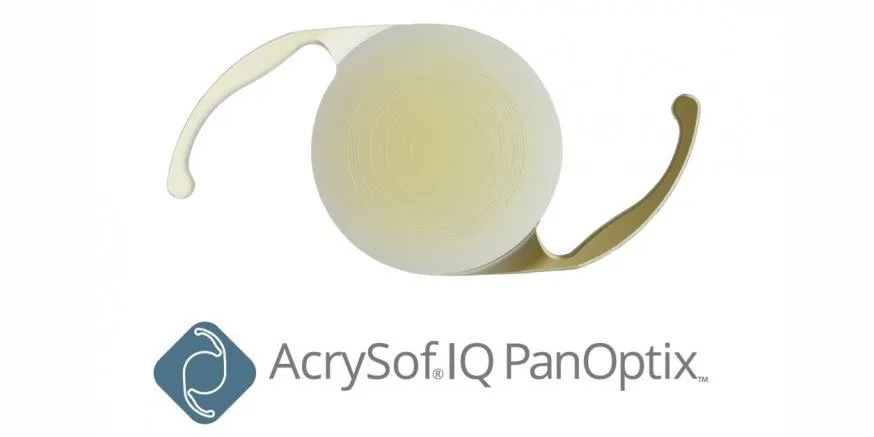
panoptix lenses
The Panoptix lens is also known as a multifocal, or trifocal, lens. It has the capability to provide excellent distance, intermediate, and near vision in people with or without astigmatism. Near and intermediate range vision with this lens is quite dependent on lighting conditions, and can be quite limited in dim light.
This lens has a number of concentric rings on its surface that divide incoming light so that 50% is devoted to distance vision, 25% to intermediate (computer, dashboard), and 25% to near (reading).
This lens works best when paired with another Panoptix or Vivity lens in the fellow eye. We never recommend this lens be paired with a standard monofocal IOL.
The Panoptix lens does require very healthy focus areas in the retina, free of any significant macular degeneration, as well as a clear cornea, free of any central scarring.
Very rarely, this lens can cause haloes and glare when night driving. Most people tolerate this very well, but this might not be the best lens for someone who drives a lot at night.
odyssey lenses
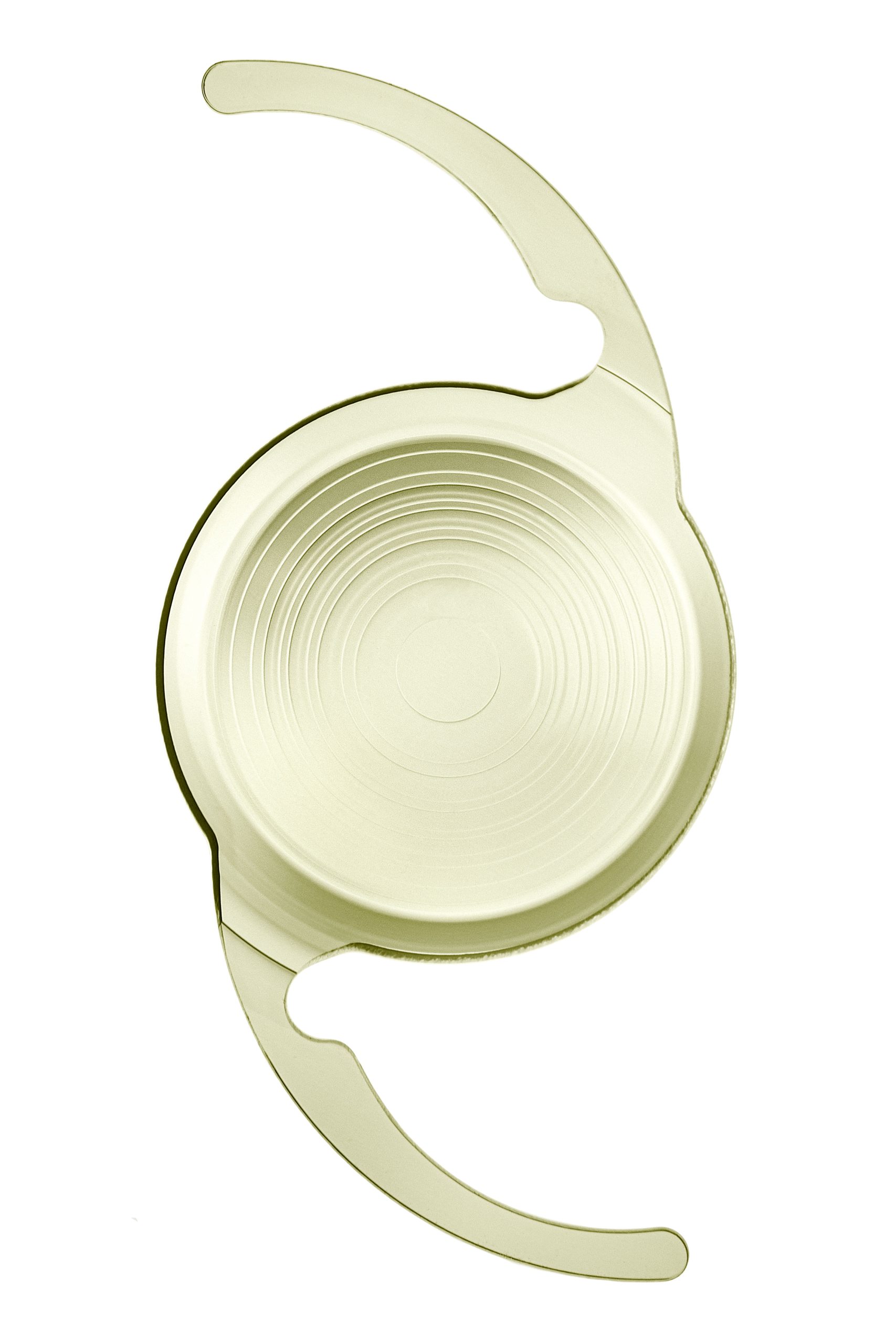
The Odyssey lens is also a multifocal lens. Released in late 2024, it has the capability to provide excellent distance, intermediate, and near vision in people with or without astigmatism. However, unlike the Panoptix lens above, the Odyssey is NOT a trifocal. It provides crisp, clear vision at all distances due to a design breakthrough. The Odyssey also provides better contrast vision than the Panoptix, allowing it improved function in dimmer lighting.
This lens works best when paired with another Odyssey lens in the fellow eye. We never recommend this lens be paired with a standard monofocal IOL.
The Odyssey lens does require very healthy focus areas in the retina, free of any significant macular degeneration, as well as a clear cornea, free of any central scarring.
Very rarely, this lens can cause haloes and glare when night driving. Most people tolerate this very well, but this might not be the best lens for someone who drives a lot at night. However, the amount of glare and haloes experienced with this lens is reportedly less than what might expect from the Panoptix.
Vision Simulator
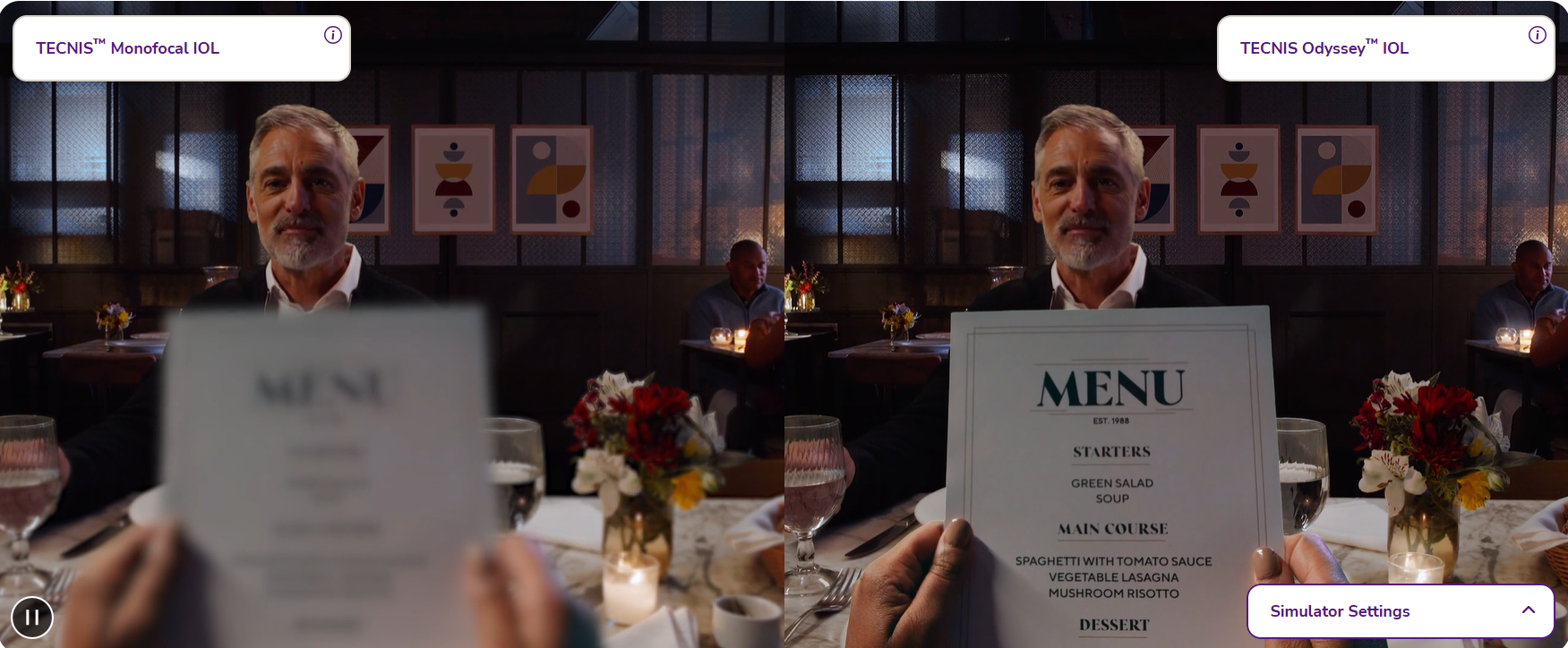
Click the image above to use the Johnson and Johnson simulator tool that allows you to compare various J&J intraocular lens options.

Odyssey Lens
vivity lenses
Differing from the technologies used by all other IOLs in the market, the Vivity Lens’ novel X-Wave technology creates an extended focal range by stretching and shifting the wavefront, rather than splitting the wavefront into multiple focal points as diffractive multifocal lenses do.
By using all available light, this IOL maintains the same vision quality as a monofocal IOL. The Vivity lens offers excellent distance vision, intermediate sharp vision for active lifestyles, and fair quality vision for close-up daily activities. The near vision with a Vivity is not quite as good as with a Panoptix, but, for most everyday purposes, it is more than adequate.
This cutting-edge new lens can be used in patients who have not previously been candidates for premium intraocular lenses due to macular puckers, macular degeneration or other pathology. This lens has no increased glare after surgery, so it is a great option for patients who may be concerned about the glare with other multifocal lenses. Only two percent of Vivity patients have starbursts, while one percent have halos. Around zero percent were bothered extensively by glare. Up to 80 percent never experience any glare with the IOL. These statistics are very similar to the standard monofocal IOL.
Vivity also works very well in people with astigmatism.
Patients have high quality vision from distance to functional near, which is a vast improvement compared to the standard monofocal lens.
This lens has a number of concentric rings on its surface that divide incoming light so that 50% is devoted to distance vision, 25% to intermediate (computer, dashboard), and 25% to near (reading).
This lens works best when paired with another Panoptix or Vivity lens in the fellow eye. We never recommend this lens be paired with a standard monofocal IOL.
The Panoptix lens does require very healthy focus areas in the retina, free of any significant macular degeneration, as well as a clear cornea, free of any central scarring.
Very rarely, this lens can cause haloes and glare when night driving. Most people tolerate this very well, but this might not be the best lens for someone who drives a lot at night.
Your intraocular lens options
You have a once in a lifetime opportunity for vision restoration when choosing your lens implant. We will help you to choose wisely.