Visit us today for your eye care!
Its Important to get
Your Eyes Checked Regularly
Yearly eye examinations not only help you maintain healthy eyesight but also helps us diagnose several eye diseases such as cataracts, glaucoma, macular degeneration and diabetic eye disease. Visit Westfield Eye Center for eye exams by an experienced ophthalmologist. We have experienced and friendly staff who will make you feel comfortable during your tests.
PLEASE NOTE: Dr. Thayer is an ophthalmologist and specializes in the medical and surgical care of eye diseases. If you are seeking a ROUTINE eye examination, you are advised to start with an optometrist.
Complete Eye Exams
A complete, dilated eye exam shouldn’t take more than 45 – 60 minutes. The exam may include the following checks:
- Medical history – Your doctor will ask you for an assessment of your vision, your overall health, your family’s medical history, if you wear corrective lenses, and if you’re on any medication
- Visual acuity – You’ll be asked to read a standardized eye chart. This procedure is to check how well you can see at different distances
- Pupils – Your doctor may shine a bright beam of light through your pupils. This is to check how your pupils respond to light
- Peripheral vision – One of the symptoms of glaucoma is the loss of side vision. This test can identify eye problems that you’re unaware of
- Eye pressure – Also called tonometry, this test measures the pressure within your eye (intraocular eye pressure, or IOP). A high IOP level is a sign of glaucoma
- Eye movement – This test is also called ocular motility. It evaluates the movement of your eyes
- The front part of your eye – A sit lamp is used to highlight the front part of your eye, including the eyelids, cornea, iris, and lens. This test can determine if you have any scars or scratches on your cornea, or if you’re developing cataracts
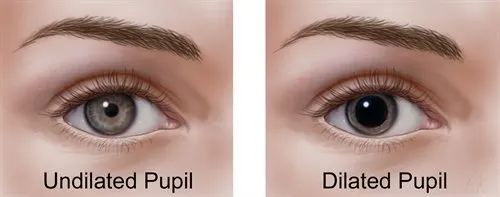
- Retina and optic nerve – Your doctor will put drops in your eye to widen or dilate the eye. This will help the doctor check your eye for signs of damage caused by a disease such as glaucoma, diabetes, macular degeneration, retinal tears, and others
- Prescription for corrective lenses – You may be asked to view an eye chart through a phoropter. This device contains different lenses, and can help determine the right eyeglass prescription for you. Dr. Thayer does NOT prescribe contact lenses.
Dialated Eye Exams
Regular dilated retina exams by an ophthalmologist are important, especially for those at higher risk for retinal diseases like diabetic retinopathy and age-related macular degeneration.
During a comprehensive eye exam, Dr. Thayer will use eye drops to make your pupils dilate (open widely) to allow a better view of the inside of your eye, especially your retinal tissue. Light sensitivity related to dilation will reverse after a few hours, but sunglasses may be needed in the interim.